
December 24, 2025
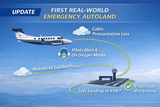
We previously brought you a story regarding the first real-world activation of Garmin’s Emergency Autoland on a Beechcraft Super King Air. Since then, new details have emerged that provide a clearer picture of what happened. While early reports suggested pilot incapacitation, it’s now confirmed the system engaged due to a rapid cabin pressurization loss. The pilots remained conscious and on oxygen masks, and they monitored rather than disabled the system, allowing Autoland to safely land the aircraft at Rocky Mountain Metropolitan Airport.
The FAA is investigating the event to review system performance and pilot decisions. This episode confirms that Emergency Autoland can function as designed under real in-flight conditions, providing a crucial safety layer when rapid decisions are needed.
Facts & Common Questions
-
Why did Autoland activate?
The system triggered automatically when cabin altitude rose above safe levels due to pressurization loss. Autoland is designed to respond even if the pilots are able to fly, providing a fail-safe for situations where time and workload are critical. -
Were the pilots incapacitated?
No. The pilots remained conscious and on oxygen masks. The early automated message to ATC stating “pilot incapacitation” is part of the system’s built-in communications and does not indicate the crew was actually incapacitated. -
Why didn’t the pilots disable Autoland?
The crew chose to monitor the system rather than intervene manually, because the automated sequence was executing correctly and efficiently. This decision reflects standard risk management in high-stress scenarios—letting proven automation handle a critical task while the pilots oversee. -
Why was the FAA involved?
Any unscheduled landing, particularly one prompted by automated systems, triggers an FAA report. The investigation ensures the system behaves as intended, evaluates pilot decision-making, and gathers insights for overall aviation safety. -
Does this mean pilots are no longer needed?
Absolutely not. Autoland is a backup, not a replacement. Pilots are still essential for decision-making, monitoring, and handling unexpected conditions outside the system’s programming. -
What does this say about future safety?
This event demonstrates that Emergency Autoland can function as designed in real-world emergencies. It shows that automation can complement pilot skill, potentially providing life-saving assistance in situations where manual control is difficult or compromised.
A Positive Outlook
This incident validates Emergency Autoland as a real-world safety tool. While pilots remain essential, the system adds an extra layer of protection in high-stress or time-critical emergencies. In the future, this technology could be a life-saving backup in more severe scenarios, giving crews—and passengers—added confidence that modern automation can intervene when it matters most.